Water is patient. A leak dripping once per second wastes more than 10,000 liters a year, and that's the visible damage. The invisible damage is worse: moisture wicking into walls, wood swelling, mold growing where nobody looks.
The good news is that almost every household leak falls into a handful of recognizable categories.
First: confirm you actually have a leak
If you suspect one but can't see anything, run this test. Shut off every tap in the house, use no water for two hours, and note the water meter reading at the start and the end. If the number moved, water is going somewhere.
To narrow it down, close the main shutoff valve and repeat. If the meter still moves with the main closed, the leak is between the meter and the house — most likely in the buried service line.
The five most frequent leaks
1. A dripping faucet
Almost always a worn washer, gasket or ceramic cartridge. It's the most approachable repair of all: shut the valve under the sink, disassemble the faucet noting the order of the parts, take the worn piece to the hardware store, and buy its exact equivalent.
The only real complication shows up on single-lever faucets from specific brands, where the cartridge is proprietary and has to be ordered.
2. A toilet that keeps running
If you hear the tank refilling when nobody flushed, the usual culprit is the flapper — a rubber disc that hardens over time and stops sealing. It's a cheap part and takes minutes to swap with no tools.
Quick test: put a few drops of food coloring in the tank and wait twenty minutes without flushing. If color appears in the bowl, the flapper is passing water.
3. The trap under the sink
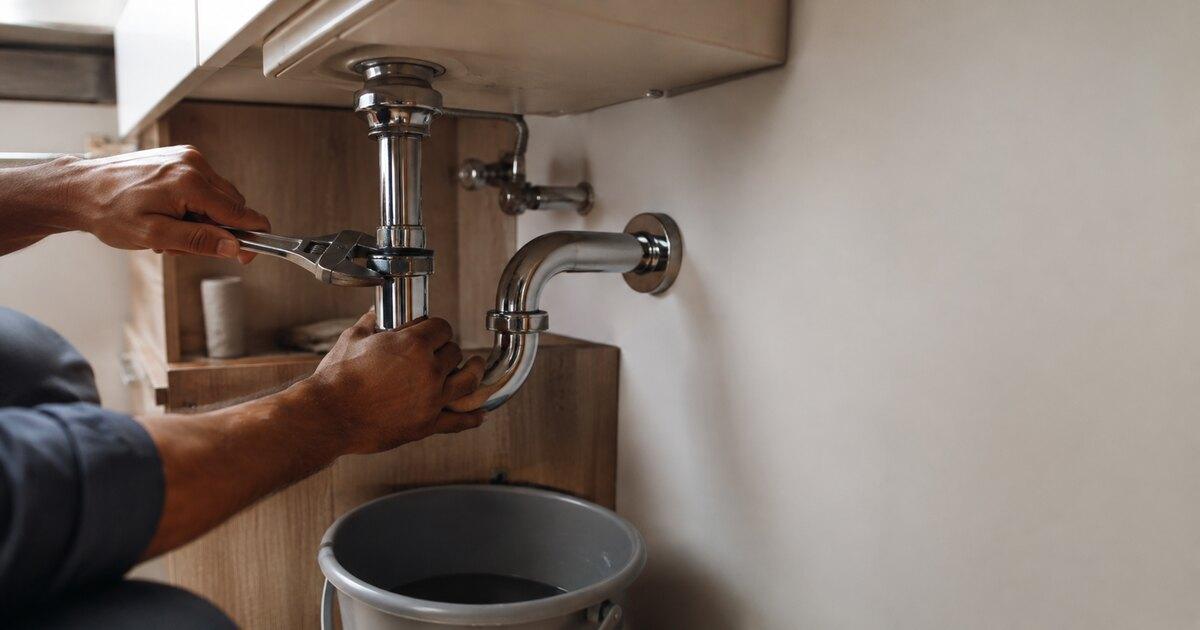
That curved pipe collects debris and its joints work loose. If you see a drip, first try hand-tightening the plastic nuts. If it persists, take it apart, clean the inside and replace the washers. A bucket underneath before you start saves you the puddle.
4. Shower leaks
Worth distinguishing here. If water shows up while the shower is running and disappears afterwards, it's usually the perimeter silicone or a tile joint. If water appears continuously, there's a compromised pipe behind the wall — and that's no longer a maintenance question.
5. Water heater connections
Check the inlet and outlet unions and the pressure relief valve periodically. Rust, white scale or moisture at the base are warning signs. A puddle under the tank usually means internal corrosion, and at that point the unit gets replaced, not repaired.
What you can handle yourself
With an adjustable wrench, PTFE tape, a screwdriver set and a plunger you cover about 60% of household incidents: swapping washers, replacing a toilet flapper, tightening a trap, changing a flexible supply hose, or clearing a drain.
The rule is simple: if the repair is downstream of an accessible shutoff valve and doesn't involve opening walls or touching fixed pipework, it's amateur territory.
When to call without hesitating
- Damp walls or ceilings, especially if it shows up on a floor below
- Low pressure throughout the whole house
- Cloudy or gritty water from any tap
- Any work on gas lines, no exceptions
- Multiple drains backing up at once, which points to a blockage in the main branch
- Repeated water hammer when closing taps
- A persistent sewer smell, a sign of a dry trap or compromised venting
Reduce the risk before it happens
Three habits with an excellent effort-to-benefit ratio:
- Know where the main shutoff valve is and check once a year that it actually turns. Many seize up right when you need them.
- Replace the flexible hoses on your washing machine and dishwasher every five years. They're among the most common causes of household flooding.
- Close the main valve if you'll be away for more than a week.
How to request a useful quote
A Helpper can price much more accurately if you share: where the water appears, whether it's constant or intermittent, how long it's been happening, whether you already tried something, and a photo or short video of the affected spot. Mention the age of the plumbing if you know it.
Conclusion
In plumbing, the difference between a low-cost repair and a major job is almost always the time that passed since the first drop. None of this requires you to become an expert — only that you stop treating a background drip as normal.
Need an inspection? Post your request on HelpyHub and get offers from verified plumbers in your area.