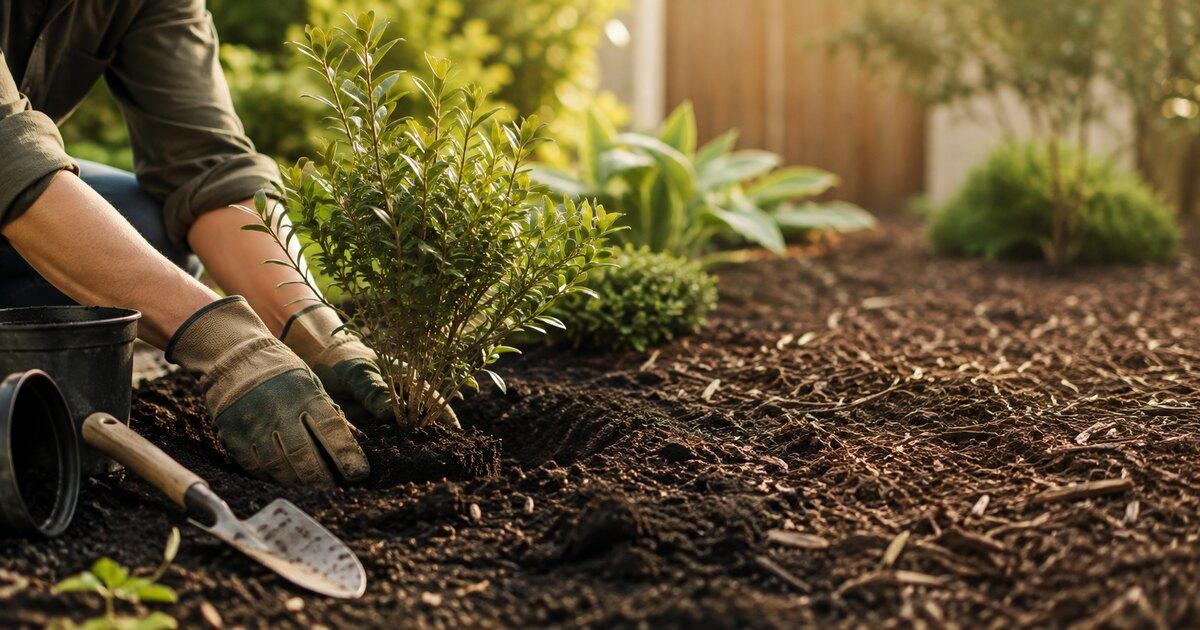
Almost every garden that fails does so for the same reason: the plants were chosen before the site was understood. It's a reversed order, and it gets paid for in dead plants and repeated work.
A garden that works starts with observation, not shopping.
First: measure your light
Over a full day, note how many hours of direct sun each area of your yard receives. Check at different times: morning, midday, afternoon.
The standard categories are:
- Full sun: six or more hours of direct sun
- Part sun: between three and six hours
- Shade: under three hours
This is the variable that most determines what you can plant, and there's no compensating for it. A full-sun plant in shade won't grow no matter how perfectly you water it; it will stretch toward the light and weaken.
Account for afternoon sun, which is more intense, and for the shadows walls or neighboring buildings cast at different times of year.
Second: understand your soil
Try this simple test. Take a handful of slightly damp soil and squeeze it:
- It falls apart immediately: sandy soil, drains fast and holds few nutrients
- It forms a ball that breaks when poked: loam, the ideal
- It forms a sticky ball that holds its shape: clay, holds a lot of water and compacts
And a drainage test: dig a hole about 30 cm deep, fill it with water, let it drain, then fill it again. If the second fill takes more than four hours to drain, you have a drainage problem to solve before planting anything. The most common cause of death in garden plants isn't lack of water — it's too much of it.
Nearly any soil improves with organic matter: compost, humus or well-rotted manure worked into the top 20 to 30 cm.
Third: design in layers, not individual plants
A garden looks finished when it has structure. The simplest way to get there is to think in three layers:
Upper layer: trees or large shrubs that set the frame and provide shade. These are the most permanent decisions, so check mature size and minimum distance to walls and pipes. A tree that's two meters at the nursery can reach twelve.
Middle layer: shrubs and medium-height plants that add volume and cover the base of the upper layer.
Lower layer: ground covers, perennials and flowers. Beyond looking good, they reduce evaporation and suppress weeds.
A composition principle that rarely fails: group plants in odd numbers, in masses of the same species, rather than dotting individual, different specimens around. Repetition is what makes a garden read as a whole.
Choose adapted plants, not pretty ones
The right question at the nursery isn't "do I like it?" but "does it belong here?". Native or climate-adapted species need less water, resist local pests better, and survive temperature swings without extraordinary care.
Group plants by water needs, too. If you mix a species that wants daily watering with one that prefers to dry out between waterings in the same bed, one of them is always suffering.
Watering: less often, more deeply
The most widespread mistake is watering a little every day. That keeps only the top few centimeters damp and encourages roots to stay near the surface, where they're vulnerable to heat.
Water fewer times per week but deeply, so moisture reaches 20 to 30 cm and roots go down after it. Do it early in the morning: at midday much of it evaporates, and at night prolonged moisture on leaves encourages fungus.
A five-centimeter layer of mulch around plants — not touching the stem — noticeably reduces evaporation and keeps soil temperature stable.
Realistic maintenance
Be honest about the time you'll actually spend. A well-designed low-maintenance garden looks better year-round than an ambitious one neglected for six months.
The basic tasks are: pulling weeds before they seed, pruning at the right season for each species, refreshing mulch once a year, and feeding according to plant type.
When to call a landscaper
It's worth it when there's earthmoving or grade changes involved, when you need to solve drainage or build retaining walls, when you want automated irrigation, when planting trees near the building, or when you'd rather have an integrated design that accounts for how the garden will look in five years and not just on planting day.
Conclusion
A garden is the only part of a house that improves on its own over time — provided the initial decisions were right. Observe first, improve the soil, choose by adaptation, and water deeply.
Post your project on HelpyHub and get proposals from verified gardeners and landscapers.