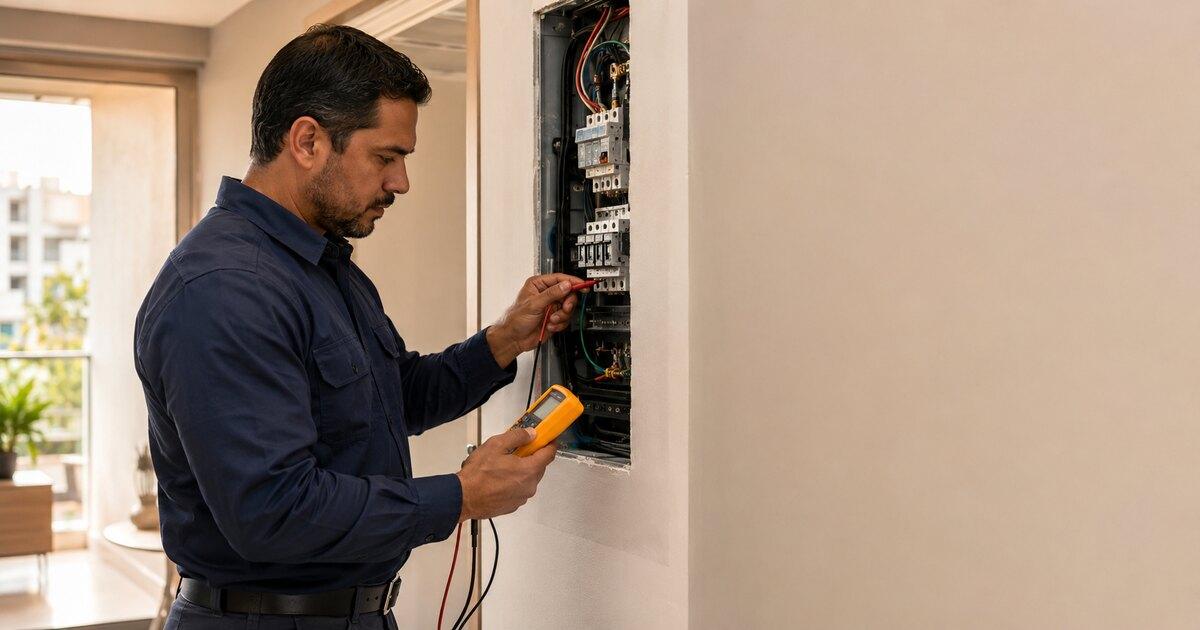
Your electrical system is the part of your home you see least and that works hardest. It sits behind walls, inside ceilings, under floors, running every day without asking for attention. So when something starts to fail, it almost never fails all at once — it warns you first. The problem is that most of those warnings get filed under "things old houses do."
They aren't. Here are the seven worth taking seriously.
1. The breaker trips often
A breaker that trips is doing exactly its job: cutting power before a wire overheats. Tripping once after you run the vacuum and the microwave together is normal. Tripping every week is not.
The usual cause is an overloaded circuit, but it can also be an intermittent short or a worn breaker that no longer holds its rated load. Resetting it over and over fixes nothing — it just silences the alarm.
2. Lights that flicker or dim
If the lights in a room dim every time the fridge or the washing machine kicks on, you have a voltage drop. Best case, that circuit is poorly balanced. Worst case, there's a loose connection in the panel or a junction box — and loose connections generate heat.
Pay particular attention if the flickering hits several rooms at once. That points at the service entrance or the main panel, not at a bulb.
3. Outlets or switches that feel warm
An outlet should never be warm. If you unplug a charger and notice the faceplate is warm, or a switch feels warm with the lights off, there's resistance where there shouldn't be. Unplug whatever is connected and stop using that point until a professional looks at it.
4. A burning plastic smell with no visible source
This is the only item on the list that doesn't allow for waiting. A sharp smell of burning plastic or fish near an outlet or the panel means insulation is melting. Cut power at the main breaker and get help immediately.
5. Sparks when you plug something in
A small, silent blue spark when plugging something in can be normal. A yellow spark, a loud one, or one that leaves black marks on the faceplate is not. That's arcing, and arcing is one of the most common causes of residential fires.
6. Two-prong outlets in wet areas
Kitchens, bathrooms, laundry rooms, patios and garages should have ground-fault protection. If those areas still have two-slot outlets with no ground and no GFCI, you're missing the protection that cuts power when electricity finds a path through a person.
It's a relatively inexpensive upgrade and one of the highest-impact safety improvements you can make.
7. A constant hum from the panel
Your panel should be silent. A hum, a crackle, or a dull click means a failing breaker or a loose terminal. Listen to it with the house quiet — if there's noise, book the visit.
What you can do and what you can't
Changing a bulb, resetting a breaker once, or replacing a plastic faceplate are reasonable household tasks. Anything that involves opening the panel, handling wiring, adding circuits or touching the service entrance requires a certified professional.
It isn't only about personal risk. Faulty work can void your home insurance coverage if something ever happens.
Have this ready before you call
When you post your request, a Helpper can quote far more accurately if you tell them:
- Which sign you noticed and how often it appears
- How long it's been happening, and whether anything changed beforehand (a new appliance, a remodel, a storm)
- Roughly how old the wiring is
- Photos of the panel with the door open
That detail saves a diagnostic visit and gets you comparable quotes.
Conclusion
Electricity is one of the few home systems where putting things off gets expensive in more than one sense. None of these seven signs necessarily means you're in immediate danger, but every one of them means something stopped working the way it was designed to.
HelpyHub connects people who need an electrical inspection with verified Helppers who respond with clear proposals and firm pricing. Post your request and get offers from electricians near you.